





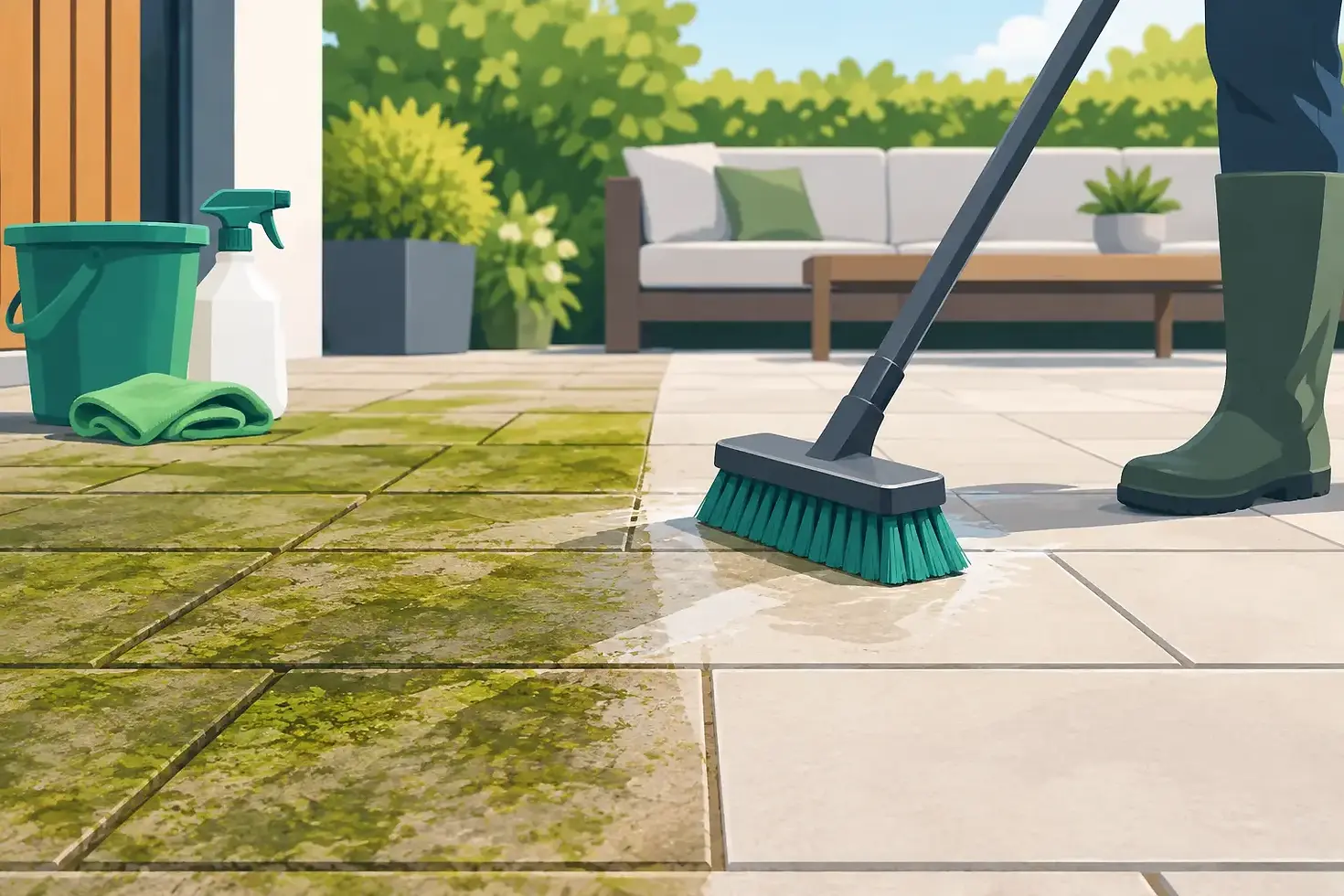
How to Clean Patio Algae Without Damaging Paving

A green patio is more than an eyesore when the rain arrives. Algae creates a slippery film that makes paths, steps and seating areas hazardous, particularly on shaded patios that stay damp through autumn and winter. Knowing how to clean patio algae properly means removing the visible growth without stripping jointing, scarring the surface or setting yourself up for the same problem a few weeks later.
The right method depends on what your patio is made from, how established the growth is and whether there are loose joints, nearby planting or drainage issues. A careful clean restores the original colour of the paving, improves grip underfoot and gives the whole garden a far better finish.
Why algae keeps coming back on patios
Algae thrives where moisture, shade and organic debris meet. North-facing gardens, areas beneath trees, patios beside fences and paving close to overflowing gutters are all common trouble spots across Hertfordshire. Fallen leaves, soil and pollen hold water against the surface, giving green algae the ideal place to spread.
It is often mistaken for moss or lichen, but the difference matters. Algae is usually a green, slippery coating. Moss is thicker and more tufted, often growing in joints. Lichen tends to form stubborn pale grey, white or black patches bonded to the paving. One patio can have all three, so a quick blast with a pressure washer may improve its appearance without dealing with the cause.
Poor drainage is another frequent issue. If water pools after rain, or a downpipe discharges straight onto the patio, cleaning alone will only provide a short-lived result. Correcting the water flow and keeping the surface clear gives any treatment a better chance of lasting.
How to clean patio algae safely
Start by choosing a dry day with enough time for the patio to dry afterwards. Keep children and pets away from the work area, and protect nearby borders if you are using a cleaning solution. Sweep away leaves, loose soil, pots and furniture first. There is little point applying treatment over a layer of garden debris.
Before using any cleaner, identify the paving. Concrete slabs and block paving generally tolerate a measured pressure wash well when they are sound. Natural stone, older flags, sandstone, limestone and pointing around steps may need a gentler approach. High pressure used too close to the surface can etch softer stone, expose aggregate in concrete and dislodge jointing material.
A sensible cleaning process looks like this:
Sweep the patio thoroughly and scrape out substantial moss by hand where necessary.
Apply an appropriate exterior algae treatment according to its instructions, avoiding unnecessary overspray onto lawns and plants.
Allow the product enough contact time to kill the biological growth rather than rinsing it straight away.
Agitate stubborn areas with a stiff brush, then rinse or pressure wash at a controlled setting where suitable.
Let the surface dry fully and inspect the joints before replacing furniture or applying any protective finish.
Do not mix products in the hope of creating a stronger cleaner. Mixing chemicals can be dangerous, may damage the paving and can harm planting. Household bleach is also a poor catch-all solution. It can lighten or mark certain materials, affect surrounding vegetation and does not always provide the lasting biocide action needed for recurring growth.
Use the pressure washer with care
Pressure washing is highly effective for removing grime, loose algae and weather staining, but it is a tool rather than the whole treatment. A fan-shaped spray is safer than a concentrated pencil jet. Keep the nozzle moving, work at a sensible distance and test an inconspicuous corner before tackling the main patio.
For block paving, avoid driving the jet directly into every joint. This can wash out kiln-dried sand, loosen blocks and leave an uneven finish. Once the surface is completely dry, re-sanding is often needed to stabilise the blocks and reduce movement. Sealing may also be worthwhile on suitable paving, but only after the surface has been cleaned, treated and allowed to dry properly.
On natural stone, lower pressure and a specialist cleaning product are often the safer choice. Some pale patches and embedded lichen will need time and repeat treatment rather than aggressive washing. Patience protects an expensive patio far better than trying to force a same-day result.
When soft washing is the better answer
Soft washing uses a low-pressure application of specialist cleaning solution to treat algae, moss, lichen and organic staining. It is particularly useful on delicate stone, ageing patios, rendered walls and areas where high pressure could cause damage.
Unlike a surface-only rinse, a professional biocide treatment targets the spores left behind in pores and joints. The patio may continue to brighten over the following days as the remaining organic growth breaks down. This can be a better option for a courtyard, shaded garden or period property where preserving the material matters as much as achieving a spotless finish.
There is a trade-off. Soft washing may not give the instant dramatic reveal of a pressure wash on heavily soiled concrete, and thick moss may still need removing first. In many cases, the best result comes from a controlled pressure clean followed by a professional treatment that helps prevent regrowth.
Avoid the common mistakes that damage patios
The most common mistake is treating every surface as if it were tough concrete. A hire pressure washer can be powerful enough to leave visible lines in sandstone, chip worn paving or blast out pointing. Excessive pressure can also push dirty water onto brickwork, doors and UPVC, creating more cleaning work around the property.
Another mistake is cleaning only the centre of the patio while leaving algae in joints, along edging and beneath furniture. Those neglected strips become a starting point for regrowth. Move planters where practical, clean along walls and inspect the shaded side of steps carefully.
It is also tempting to seal a patio straight after washing. Do not. Trapped moisture beneath a sealant can cause clouding, patchiness or a poor bond. The paving must be clean, dry and compatible with the chosen sealer. Some natural stones should not be sealed with standard products at all.
Finally, do not overlook runoff. Dirty water and cleaning products should not be directed into ponds, watercourses or drains where they could cause harm. Use products responsibly, follow the label and keep applications controlled.
Keep your patio clear for longer
Once the algae has gone, small maintenance jobs make a real difference. Sweep leaves and soil before they turn into a damp layer, especially after windy weather. Trim back overhanging growth where it is practical, and make sure gutters, downpipes and drainage channels are not dumping water across the paving.
A light maintenance treatment once or twice a year can help in persistently damp areas. The right timing depends on the patio's position. A bright, well-drained south-facing patio may need little more than regular sweeping, while a shaded path beneath mature trees may benefit from a preventative biocide treatment before winter.
Check jointing and edging after severe weather too. Open joints collect debris and retain moisture, while loose slabs can become a trip risk. Looking after the structure of the patio is part of keeping it clean.
When it is worth calling a professional
DIY cleaning is reasonable for a small, sound patio with light algae. It becomes less straightforward when the surface is large, heavily stained, slippery on steps, made from delicate stone or affected by stubborn lichen. If blocks need re-sanding, a sealer is being considered, or drainage is causing repeated growth, professional equipment and material-specific methods can avoid expensive mistakes.
Wright’s Dirt Blasters uses controlled pressure washing and soft washing methods selected for the surface in front of us, not a one-size-fits-all approach. Where required, a professional biocide treatment, re-sanding and sealing can turn a tired outdoor area into a clean, safer space with a finish built to last.
A patio should be somewhere you can walk out with a coffee after rain, not a surface you have to edge across cautiously. Deal with algae early, clean it with the right method and keep moisture and debris under control, and your paving will stay brighter, safer and easier to enjoy.


Comments