





Solar Panel Maintenance Guide for UK Homes

A solar array can look clean from the garden while a thin film of pollen, bird mess, traffic grime and algae is quietly cutting into its output. This solar panel maintenance guide sets out what homeowners should check, what can be safely left alone, and when professional cleaning is the sensible option. The aim is not to make panels look shiny for the sake of it. It is to keep an expensive roof-mounted asset working efficiently without damaging the glass, seals, fixings or roof beneath it.
For homes around Buntingford, Stevenage, Royston, Bishop’s Stortford, Ware and the surrounding villages, the main issue is usually a mixture of seasonal debris and local conditions. Panels near trees pick up pollen, leaves and sap. Rural properties may see heavier bird fouling, while shaded roofs can develop algae around panel edges. A little dust is rarely a crisis, but concentrated dirt in one area can create uneven performance and should not be ignored.
Why solar panel maintenance matters
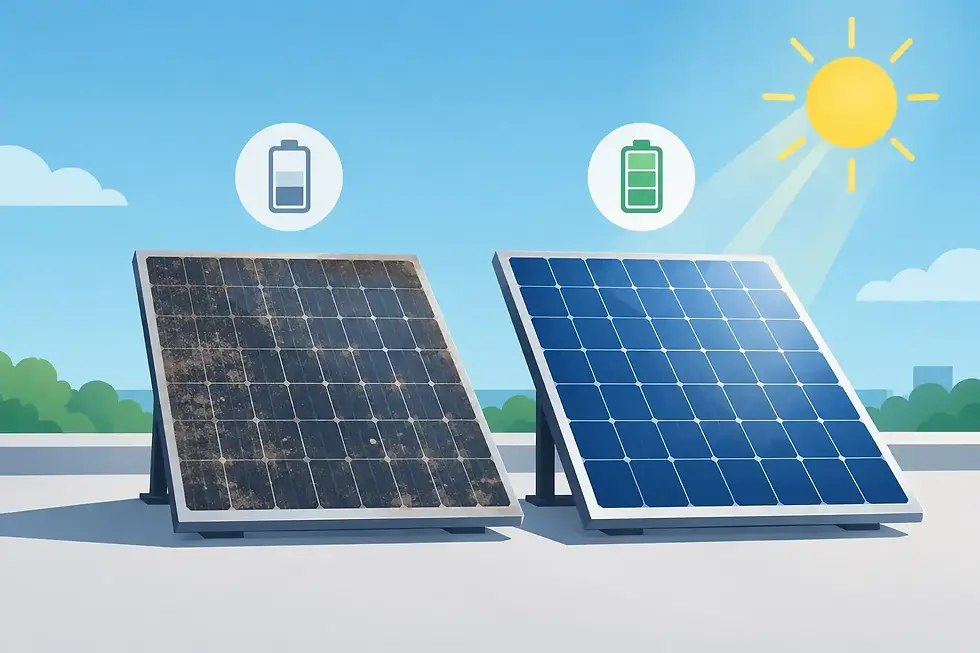
Solar panels are designed to live outdoors, so rain, frost and normal weather will not harm them. They are tough pieces of equipment, but they are not maintenance-free. Dirt blocks light from reaching the photovoltaic cells. When only part of a panel is heavily soiled, that section can underperform and affect the output of the wider system, depending on how it is configured.
The loss will vary. A lightly dusty array on an open roof may lose very little, especially after regular rainfall. Panels beneath overhanging branches or close to a busy road can need more attention. The practical approach is to watch for a noticeable change in generation compared with the same season in previous years, then investigate the cause rather than cleaning on a fixed schedule with no reason.
Maintenance also gives you a chance to spot issues that have nothing to do with dirt. Loose debris around the panels can hold moisture against roof coverings. Nesting birds may interfere with cables or create a persistent mess. Damaged roof tiles, lifted flashing and blocked gutters can all become costly if they go unnoticed because the panels make that part of the roof harder to inspect.
How often should solar panels be cleaned?
For many Hertfordshire homes, an annual visual inspection and a professional clean every 12 to 24 months is a reasonable starting point. That is not a hard rule. A south-facing roof with no nearby trees may need little more than occasional checks, while panels under trees or on a farm, stable, warehouse or commercial unit may benefit from a clean every six to 12 months.
Bird droppings are the exception. They do not always wash away in rain and can bake onto glass during dry weather. If you can see a heavy patch from ground level, do not wait for the next annual visit. Arrange a safe inspection.
The best time to clean depends on the property. Spring is useful after winter grime and before the brighter months. Late summer or early autumn can also work well, particularly if leaves, pollen and dust have built up. Avoid treating cleaning as a race for a hot, sunny day. Panels become extremely hot, cleaning solution can dry too quickly, and working on a roof in strong sun is less safe.
Rain helps, but it does not replace cleaning
A good downpour can remove loose dust. It will not reliably shift sticky pollen, bird mess, lichen, oily deposits or debris caught under the lower edge of a panel. Rainwater can also leave mineral marks behind. If panels still look patchy after wet weather, or your monitoring app shows a performance dip that cannot be explained by the season, a proper clean may be worthwhile.
Safe solar panel cleaning methods
The biggest mistake is treating solar panels like a patio. They should never be blasted with a pressure washer. High pressure can force water into seals, damage components, disturb roof tiles and turn a straightforward maintenance job into an expensive repair. Abrasive pads, harsh degreasers, strong solvents and household glass cleaners are equally poor choices, as they can scratch the surface or leave residue.
A professional approach uses purified water and suitable soft-bristled equipment, applied at low pressure. The goal is to lift grime gently without grinding it across the glass. Purified water is particularly useful because it dries without the spotting left by hard-water deposits. The frame edges, drainage channels and visible areas beneath the array should be checked at the same time, with care taken not to pull cables, lean on the panels or interfere with electrical connections.
Access is often the real challenge. A single-storey extension might be reachable from the ground with appropriate equipment, but many domestic arrays sit high on pitched roofs. Climbing onto tiles without the right access plan risks broken tiles, falls and damage to the system. Ladders can also be dangerous around roof edges, gutters and electrical equipment. If safe access is not obvious, it is not a DIY job.
Checks you can make from the ground
You do not need to climb a roof to keep an eye on your solar array. A quick monthly look from the garden or pavement can reveal whether anything has changed. Compare the panel surfaces for obvious dirt bands, leaf build-up or bird fouling. Look for encroaching branches, new shade from vegetation, loose guttering or signs that gutters are overflowing near the installation.
Check your inverter or generation monitoring app as well. Output naturally falls in winter and on cloudy days, so compare similar periods rather than comparing a bright June day with a wet December one. A sudden unexplained drop, repeated fault notification or a panel that appears physically damaged calls for an installer or qualified solar electrician, not a cleaning contractor.
There are a few warning signs that deserve prompt attention:
cracked glass, damaged frames or visibly loose panels;
exposed, chewed or hanging cables;
repeated inverter faults or a sharp ongoing fall in output;
nesting activity beneath the panels;
roof leaks, slipped tiles or overflowing gutters around the array.
Cleaning can improve light exposure, but it will not fix an electrical fault or roof defect. Keeping those jobs separate protects both your warranty and your safety.
Protecting the roof around the panels
Solar panel maintenance is closely tied to general roof and gutter care. Leaves lodged behind panels can funnel water into one area, while blocked gutters can send water back towards fascias and roof edges. Moss on nearby tiles may shed onto the panels and trap damp debris around the installation. None of this means the panels are at fault, but neglect around them can create problems that are harder to reach later.
Roof cleaning must be handled carefully. Aggressive pressure washing on roof tiles is not an appropriate companion to solar-panel care. A low-pressure method, manual moss removal where suitable, and a professional biocide treatment are often the safer route for preserving tile surfaces. Any work near an array should respect cables, fixings and panel clearances throughout.
If birds repeatedly nest beneath the panels, specialist solar bird proofing may be worth considering. It can prevent droppings, noise and debris from becoming a recurring issue, but it needs fitting correctly. Poorly installed mesh can trap debris or affect ventilation, so this is another job where a tidy, purpose-built installation matters.
When to book professional help
Book a professional clean when there is visible, stubborn contamination; when output has slipped and dirt is a plausible cause; or when the array cannot be safely reached from the ground. It is also sensible to combine panel cleaning with gutter clearing or a roof inspection, provided each surface is treated with the correct method rather than a one-size-fits-all wash.
Ask what equipment and water will be used, how access will be managed, and whether the contractor is insured for the work. A careful cleaner should be comfortable explaining why pressure washing is avoided, how roof tiles will be protected and what they will do if they spot a fault outside their scope. The best result is a spotless finish with no risk taken on the roof.
At Wright’s Dirt Blasters, the focus is on meticulous exterior care, using safe methods and professional equipment to clean hard-to-reach surfaces without cutting corners. A clean array, clear gutters and a well-maintained roofline do more than improve kerb appeal. They give your solar investment the clear, protected surroundings it needs to keep doing its job.


Comments